As a parent, you quickly realize that childhood is a series of “outgrowing” things. One moment they are outgrowing their onesies, the next, their cribs, and eventually, their toys. It often feels like a never-ending cycle of buying and replacing. However, when it comes to furniture, it doesn’t have to be this way.
The Minimalist Montessori Bookshelf is designed with a “lifetime” philosophy in mind. It isn’t just a piece of nursery furniture; it is a functional companion that evolves alongside your child’s development. Here is how this simple wooden shelf transitions through the different stages of childhood.
Phase 1: The Nursery Era (Ages 0–2)
In the first two years, a bookshelf serves as the foundation for early literacy and visual stimulation.
-
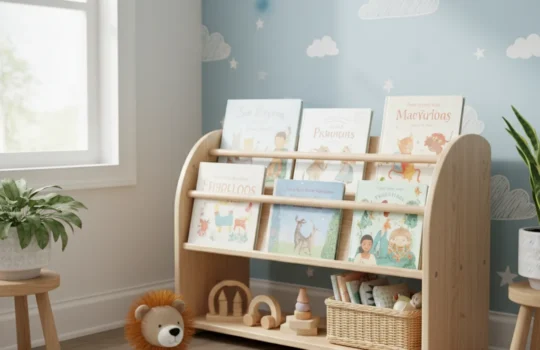
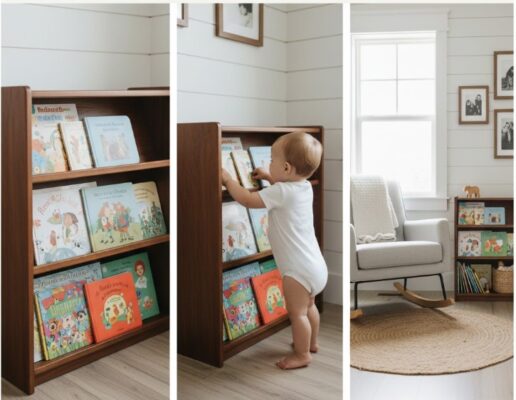
Bridges to Art: For an infant, book covers are their first introduction to art and color. The front-facing design of a Montessori shelf turns books into a decorative gallery, catching their eye even before they can read.
-
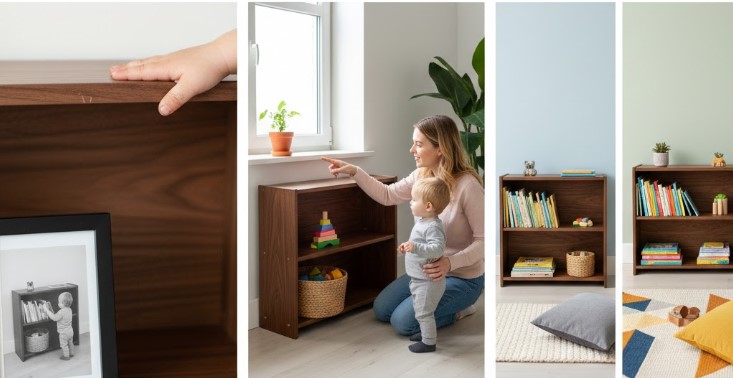
Safety First: During the “pulling up” and “cruising” stage, quality matters. A solid wood shelf with rounded edges provides a safe environment for curious hands.
-
Soft Transitions: It’s the perfect height for storing thick board books and cloth books, allowing you to create a “Reading Nook” right next to the nursing chair.
Phase 2: The Toddler Playroom (Ages 3–5)
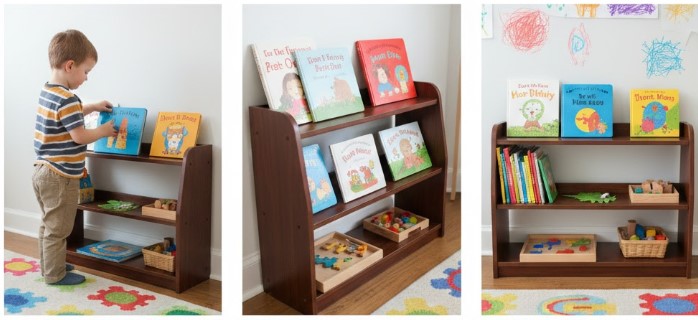
This is the age of independence. In the Montessori philosophy, the environment should be accessible so the child can do things “all by myself.”
-
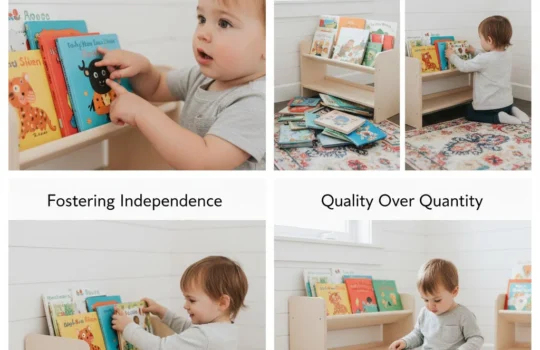
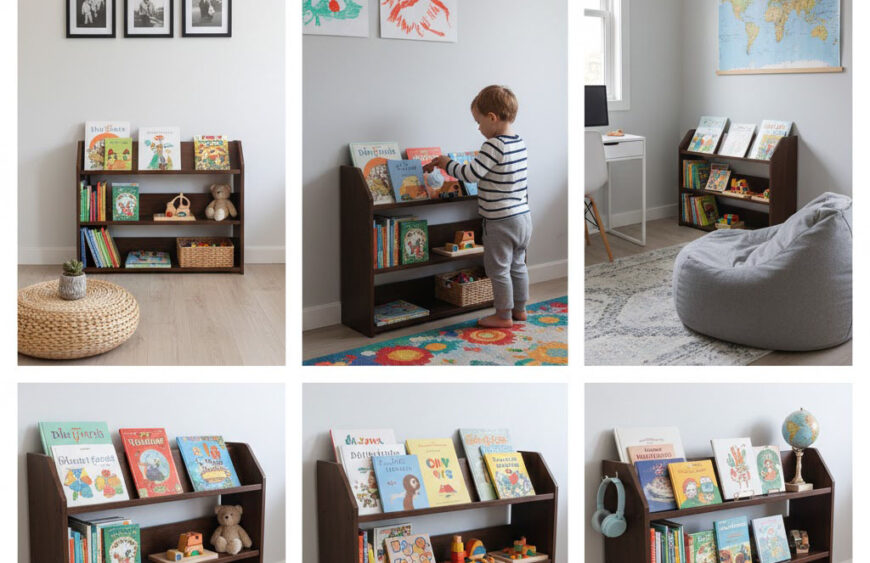
Empowering Autonomy: Because the shelves are low to the ground, your toddler can choose their own bedtime story and—more importantly—learn to put it back.
-
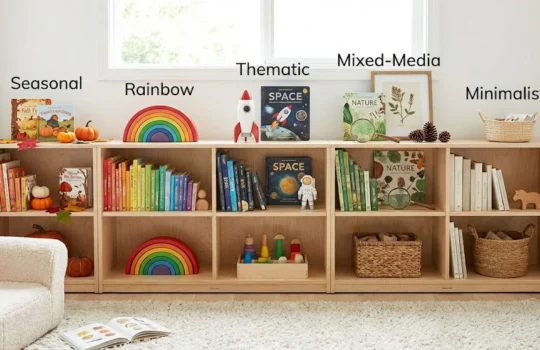
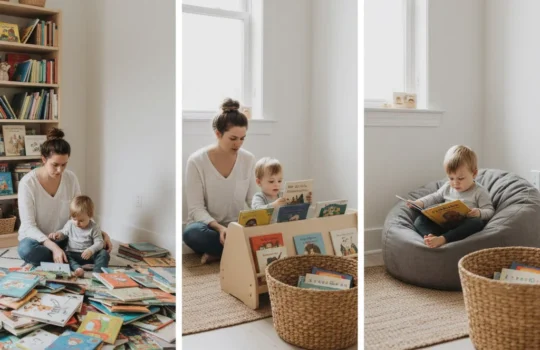
Book Rotation: Instead of a cluttered toy box, use the minimalist shelf to display 5–10 curated books. This prevents “choice paralysis” and keeps their interest fresh.
-
Beyond Books: At this stage, the shelf often doubles as a display for puzzles, wooden blocks, or “treasures” found during a walk in the park.
Phase 3: The Big Kid Transition (Ages 6+)
Many “themed” kids’ furniture pieces start to look out of place as a child enters school age. However, minimalism is timeless.
-
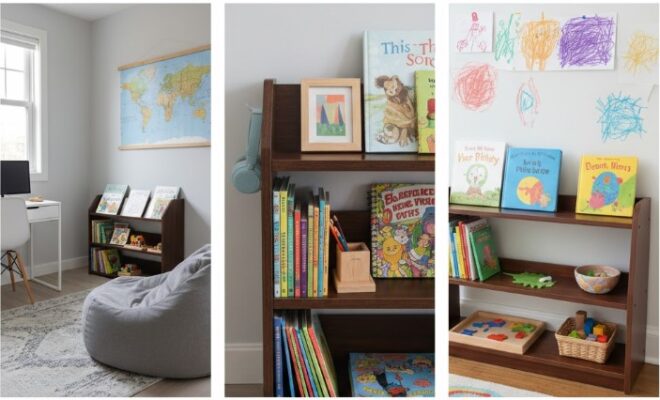
Maturing Aesthetics: The clean lines and natural wood grain of a minimalist shelf fit perfectly into a more “grown-up” bedroom. It no longer looks like a baby item; it looks like a designer accent.
-
Versatile Storage: As their reading habits change, the shelf transitions from picture books to:
-
Graphic novels and comic books.
-
Art supplies and sketchbooks.
-
Awards, trophies, or collectible figures.
-
-
A Creative Gallery: Use it to display their own artwork or framed photos, giving them a sense of pride in their personal space.
The Value of Sustainable Design
Investing in a solid wood Montessori bookshelf is a vote for quality over quantity.
-
Heirloom Quality: Unlike particle-board furniture that chips and peels, solid wood ages beautifully. It can withstand the bumps and scratches of childhood and can even be passed down to younger siblings or future generations.
-
Eco-Friendly: By choosing a piece that lasts 10+ years instead of 2, you are reducing waste and making a sustainable choice for the planet your child will inherit.
-
Neutral Versatility: Natural wood matches any color palette. Whether you move houses or decide to repaint the room from blue to green, your bookshelf will always belong.
A Legacy of Learning
A bookshelf is more than just a storage unit; it is a gateway to imagination. By choosing a piece that grows with your child, you aren’t just decorating a room, you are providing a consistent, reliable anchor for their learning journey. From the first board book in the nursery to the first chapter book in the big-kid room, let this shelf be the backdrop to their most beautiful stories.