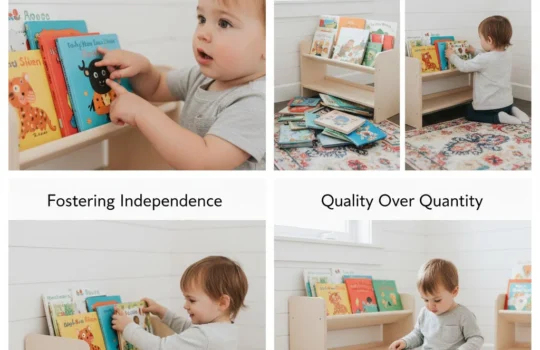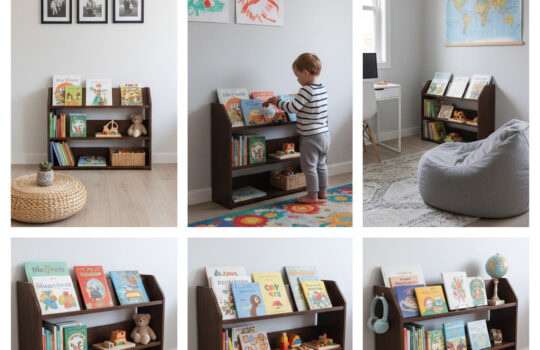
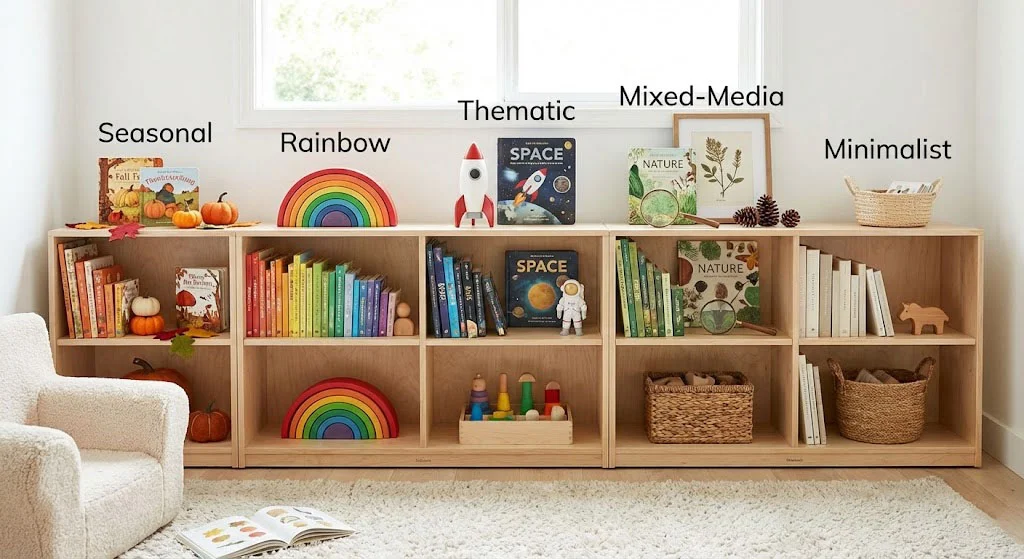
A Montessori bookshelf is more than just a place to put books. In a child’s world, it is a changing stage, a curated gallery that reflects their growing interests, their current obsessions, and the changing world outside their window.
While the primary function of a front-facing shelf is to encourage literacy, there is no reason it shouldn’t be a beautiful centerpiece in your home. Whether you are a fan of vibrant colors or a devotee of “Scandi-minimalism,” here are five creative ways to style your Montessori bookshelf to keep your child engaged and your nursery looking Pinterest-worthy.
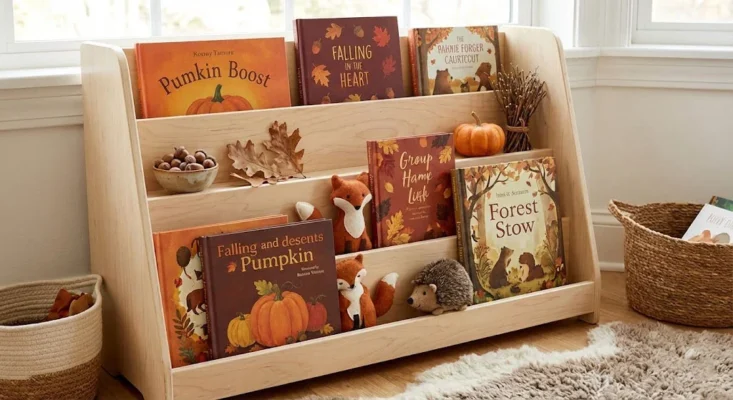
The Seasonal Celebration
Children are deeply connected to the rhythm of nature. Bringing the outdoors in through your book display helps them understand the passing of time and the beauty of the seasons.
-
How to do it: Rotate your books to match the current season. In Autumn, choose books with orange, red, and brown covers. In Winter, focus on stories about snow, hibernation, and holiday magic.
-
The Styling Secret: Add small “nature treasures” to the shelf. A small bowl of acorns in the fall, a vase of dried lavender in the spring, or a few smooth stones in the summer.
-
Why it works: It turns the bookshelf into a living calendar, making the “new” books feel like a celebration of the world they see when they step outside.
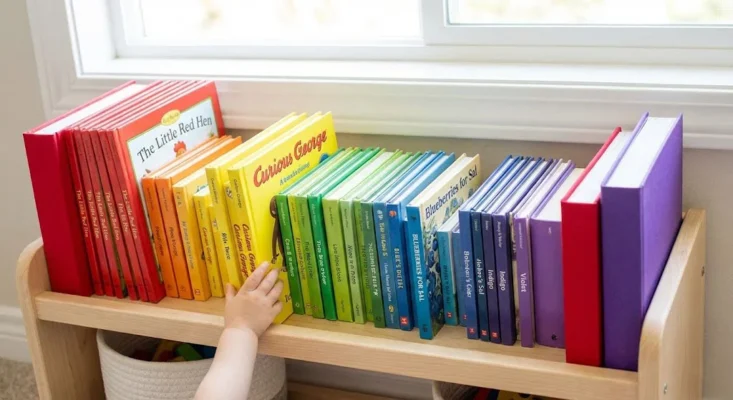
The Rainbow Spectrum (Color-Coding)
There is something deeply satisfying about a rainbow-organized shelf. For a toddler, a color-coded display is not just aesthetically pleasing—nurturing their visual order—it’s a learning game.
-
How to do it: Group your books by the dominant color of their spines and covers. Arrange them in the “ROYGBIV” order (Red, Orange, Yellow, Green, Blue, Indigo, Violet).
-
The Styling Secret: Use books with bold, solid-colored covers as your “anchors” at the ends of each row.
-
Why it works: This is a fantastic way to teach color recognition. You can ask your child, “Can you find a story in the yellow section today?” It also creates a sense of visual harmony in a room that might otherwise feel cluttered with toys.
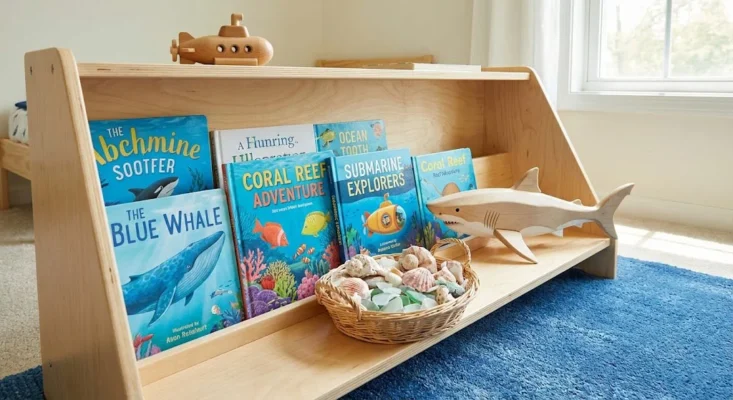
Thematic Deep-Dives (The “Passion” Shelf)
Does your child currently live and breathe dinosaurs? Or perhaps they are obsessed with anything that has wheels? Use the bookshelf to fuel that fire.
-
How to do it: Dedicate the entire shelf to one specific interest. If the theme is “The Ocean,” display books about whales, coral reefs, and submarines.
-
The Styling Secret: Incorporate 3D elements. Place a high-quality wooden shark model or a basket of seashells right next to the books. This bridges the gap between reading about a subject and playing with it.
-
Why it works: It honors the child’s current “sensitive period.” When a child sees their passion reflected on their shelf, they feel seen and supported in their learning.
The Mixed-Media “Curiosity Corner”
In a true Montessori environment, we want to engage all the senses. A mixed-media shelf combines literature with art and tactile objects.
-
How to do it: Instead of filling every inch with books, leave “negative space” for other objects.
-
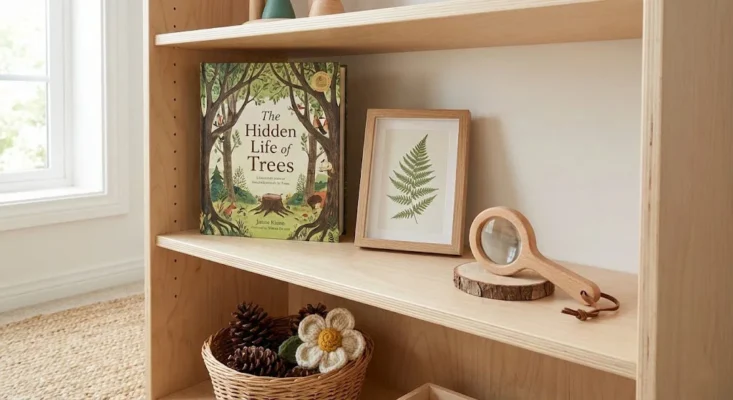
The Styling Secret: Use the “Rule of Three.” Group a beautiful picture book, a framed piece of art (perhaps a botanical print), and a tactile object (like a wooden magnifying glass or a hand-knitted flower).
-
Why it works: It makes the bookshelf look like a small museum exhibit. It slows the child down, encouraging them to look closely at each item rather than just grabbing a book and running.
The Minimalist & Monochrome Look
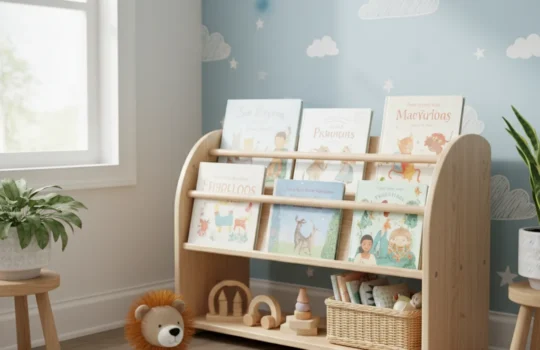
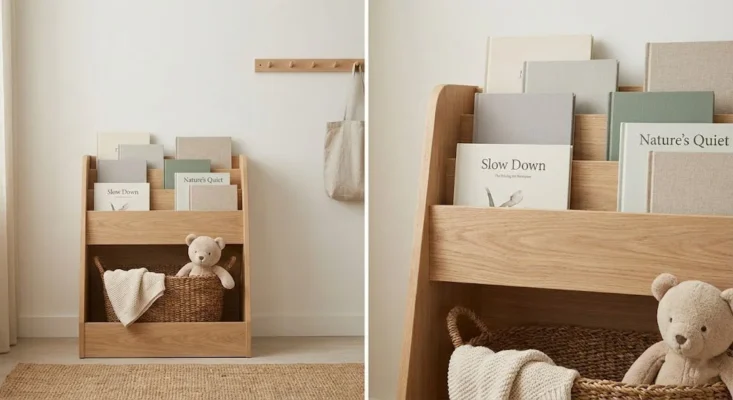
For parents who prefer a calm, neutral aesthetic, the monochrome look is timeless. This style works exceptionally well with solid wood bookshelves, as it allows the natural grain of the wood to be the star.
-
How to do it: Choose books with neutral, muted, or pastel covers. Think linen textures, cream tones, and earthy greens.
-
The Styling Secret: Use “Open Front” storage. If your shelf has a bottom bin, use a simple wicker basket to hold extra soft toys or blankets in matching neutral tones.
-
Why it works: It creates a “Zen” environment. In a world full of plastic and loud noises, a minimalist bookshelf provides a visual “quiet zone” that is perfect for the wind-down period before bedtime.
Pro-Tips for the Perfect Display
-
Mind the Negative Space: A common mistake is crowding the shelf. If the books are overlapping too much, the child can’t see the art. Less is always more.
-
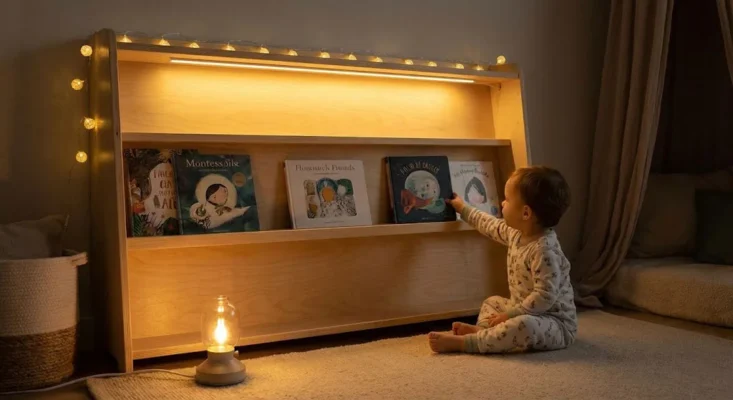
Lighting is Key: Place a small, warm-toned LED lamp nearby or wrap a string of fairy lights around the top. A well-lit shelf is a “magnetic” shelf—it draws the child in.
-
Check the Height: Always ensure the most exciting books are at the child’s eye level. If they have to crane their neck to see the top shelf, they probably won’t choose those books.
A Foundation for Imagination
Styling your Montessori bookshelf is an act of love. It shows your child that their space is intentional, respected, and full of wonder. Whether you’re organizing by color or by season, remember that the “right” way to style a shelf is the way that makes your child reach out and pull a book down.
Ready to create your own reading sanctuary? Our Handcrafted Minimalist Montessori Bookshelves are designed to be the perfect blank canvas for your creativity. Made from premium solid wood, they bring warmth and organization to any nursery.